By IDX | Branded Goods & Uniform Solutions
The Pen Test

Think about the last promotional pen you actually kept. Chances are it wasn’t the most expensive one you ever received. It was the one with the right barrel size, ink that didn’t skip, and a logo placed somewhere that didn’t get in the way of your grip. Somewhere along the way, it became your pen, the one you reach for without thinking.
That’s the whole argument in miniature. A promotional product doesn’t need to be expensive to work. It needs to be the item people choose to keep using. A two-dollar pen that earns a permanent spot in someone’s bag will outperform a forty-dollar item that sits in a drawer, every time.
This matters because the conversation around promotional products has gotten stuck on the wrong axis. The debate isn’t “high-quality” versus “cheap.” It’s whether an item is fit for purpose: useful enough, well-made enough, and well-timed enough to be used repeatedly and remembered fondly. Price is one input into that equation. It is rarely the deciding one.
Redefining “Quality”
The U.S. promotional products industry reached a record $27.7 billion in 2025, which tells you organizations are serious about branded merchandise as a marketing channel. It doesn’t tell you they’re spending well. A lot of that money goes toward large quantities of items that were never going to earn a second use, regardless of their price point.
The more useful framework isn’t:
Quality = premium or expensive
It’s:
Quality = fit for purpose + repeated use + positive brand association
Under that definition, a $6 tote bag that gets carried to the farmers market every Saturday is a higher-quality item than a $60 jacket that never leaves the closet. The price tag tells you what you spent. The behavior of the recipient tells you what you got for it.

Let the Campaign Objective Pick the Product
Different goals call for different merchandise, and a single “go premium” strategy doesn’t serve all of them equally well.
A brand-awareness push benefits from broad distribution of something genuinely useful. The goal is volume of positive impressions, so the per-unit cost needs to stay low enough to support reach. An employee onboarding program is closer to the opposite case: a handful of durable, daily-use items at hire date will do more for engagement than a wide assortment of trinkets. Customer appreciation gifts can justify spending more per item, because the audience is small and the relationship is established. Trade shows sit in the middle, the right answer is usually a balance of reach and memorability rather than maximizing cost on either end.
The question worth asking before any merchandise order goes out isn’t “what’s our budget per item.” It’s:
What behavior are we trying to drive?
Selecting the product follows from that answer, not the other way around.
What the Recall Data Actually Shows
None of this means data is irrelevant, it just works better as support than as the headline.
The 2026 ASI Global Advertising Impressions Study, based on surveys of nearly 5,000 consumers, found that promotional products outrank both television and digital advertising as consumers’ preferred advertising channel, delivering brand impressions at an average cost of about six-tenths of a cent each. Recall numbers back that up: 85% of consumers remember the advertiser who gave them a logoed item, 90% recall the brand name, and 80% remember the brand’s messaging.
Those figures describe the category broadly. They get meaningfully better for items that actually get used, and meaningfully worse for items that don’t. A product used for months multiplies its impressions with every use. A product thrown away on day one stops generating anything at all. The recall statistics describe potential; whether an item is fit for purpose determines whether that potential is realized.
Retention Tells You What People Actually Value
According to PPAI consumer research, nearly nine out of ten people keep a promotional product for more than a year, and four out of ten keep one for more than a decade. Only 18% discard an item within the first year. The top reason people give for keeping something is usefulness; 78% of consumers say they keep promotional products specifically because they find them useful.
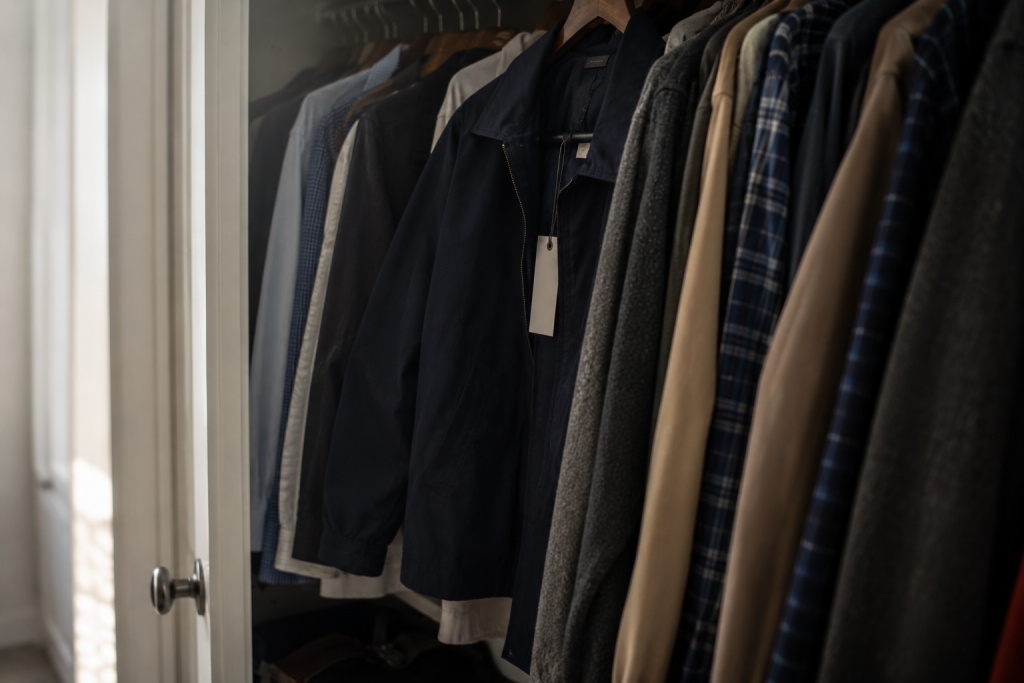
Apparel illustrates this well: six of the top ten items people kept for ten-plus years were apparel, with t-shirts ranking first. But the deciding factor wasn’t the price of the shirt. It was whether the shirt fit, felt good, and held up in the wash. A well-made $8 t-shirt and a poorly cut $25 one will get very different lifespans in someone’s closet, and the price difference predicts almost none of it.
Distribution Matters as Much as the Product Itself
Here’s an example worth sitting with: a local restaurant handing out branded pens at the register can generate more impressions, and more business, than a far costlier campaign run by a much larger company; not because the pen is better designed, but because it stays in constant rotation. It gets borrowed, left on a counter, picked up by someone else, and carried out the door. The item changes hands more often than a premium item ever would, because it’s cheap enough to give away freely and useful enough that people don’t throw it out.

The lesson generalizes: where and how often an item circulates can matter more than what it cost to make. A modest item distributed into a high-frequency environment can outperform a premium item distributed once and rarely seen again.
Value Isn’t Just Utility
Most promotional products thinking stops at utility, does the recipient use the thing. But promotional products create value along at least four distinct dimensions, and the highest-performing programs usually combine more than one:
- Utility — a favorite pen, a tumbler that gets refilled every morning, a tote that goes everywhere.
- Visibility — apparel, hats, and bags that are seen by other people, not just used by the recipient.
- Emotion — items tied to a memory, a milestone, or an experience.
- Identity — apparel and gifts that signal belonging to a team, a company, or a community.
A quality tumbler scores well on utility and modestly on visibility. It rarely scores on emotion or identity, and that’s fine. It isn’t trying to.
Compare that to Disney’s pin trading program, which started as straightforward merchandise and evolved into a collectible experience. The pins themselves are inexpensive to produce. Their value has almost nothing to do with material cost and almost everything to do with the memories, identity, and community built around collecting and trading them. A relatively cheap pin, in the right context, gets retained and treasured longer than a premium tumbler that spends most of its life in a cabinet.
The takeaway: people don’t keep things because they’re expensive. They keep things because they’re useful, meaningful, or representative of who they are. A merchandise strategy that only optimizes for utility is leaving emotional and identity-based value on the table.
Environment Changes the Outcome
The same product can perform very differently depending on where and how it’s used. A branded fleece handed out at a ski resort lodge will be worn constantly and seen by hundreds of people in a season. The identical fleece handed out at an indoor desk job in July will sit in a closet until winter, if it survives that long. Matching the item to the environment where it’ll actually be used and seen often matters more than upgrading the item itself.
Cost Per Impression, as One Data Point Among Several
Cost-per-impression figures are useful for comparing categories, as long as they’re read as one input rather than the full picture:
| Product | Approx. Cost | Lifetime Impressions | Cost Per Impression |
| Tote bag | $6 | ~5,000 | $0.001 |
| Baseball cap | $13 | Thousands | $0.003 |
| Fleece/outerwear | Higher | Thousands | <$0.004 |
| Magazine ad | — | — | $0.058 |
| TV ad | — | — | $0.019 |
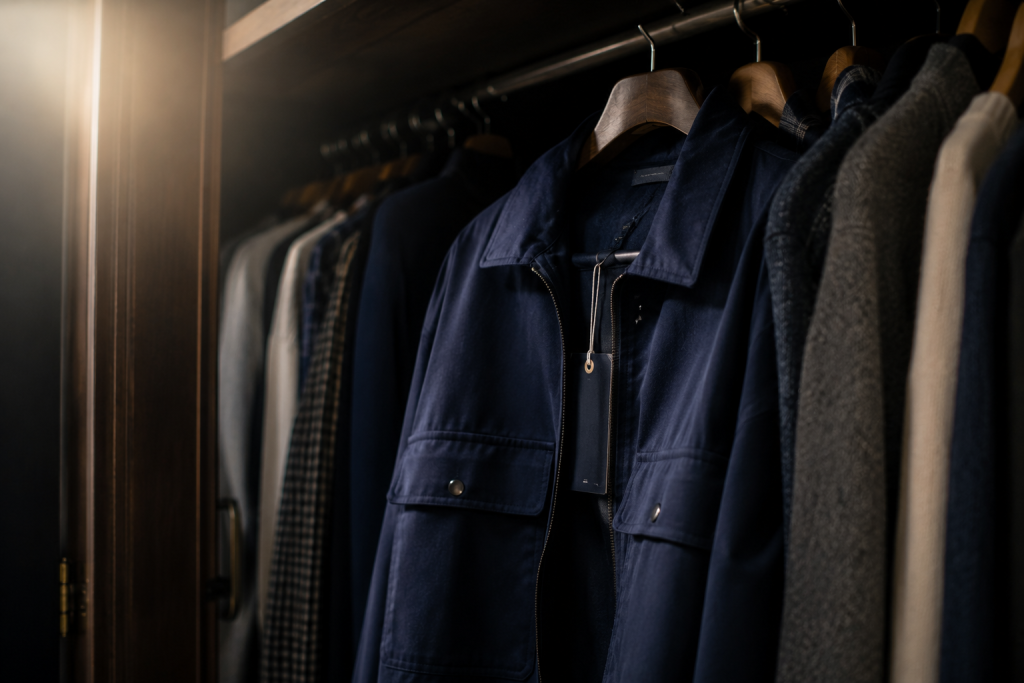
These numbers only hold if the item gets used repeatedly, which circles back to the central point. A $30 jacket worn to work twice a week for two years will outperform thirty cheap giveaways handed out at a trade show that never leave the swag bag, not because of what each item cost, but because of what each item earned in actual use. ASI research puts the average promotional product’s lifetime impressions at around 3,300; well-matched, frequently used items substantially exceed that.
Low-Quality Items Don’t Just Underperform — They Work Against You
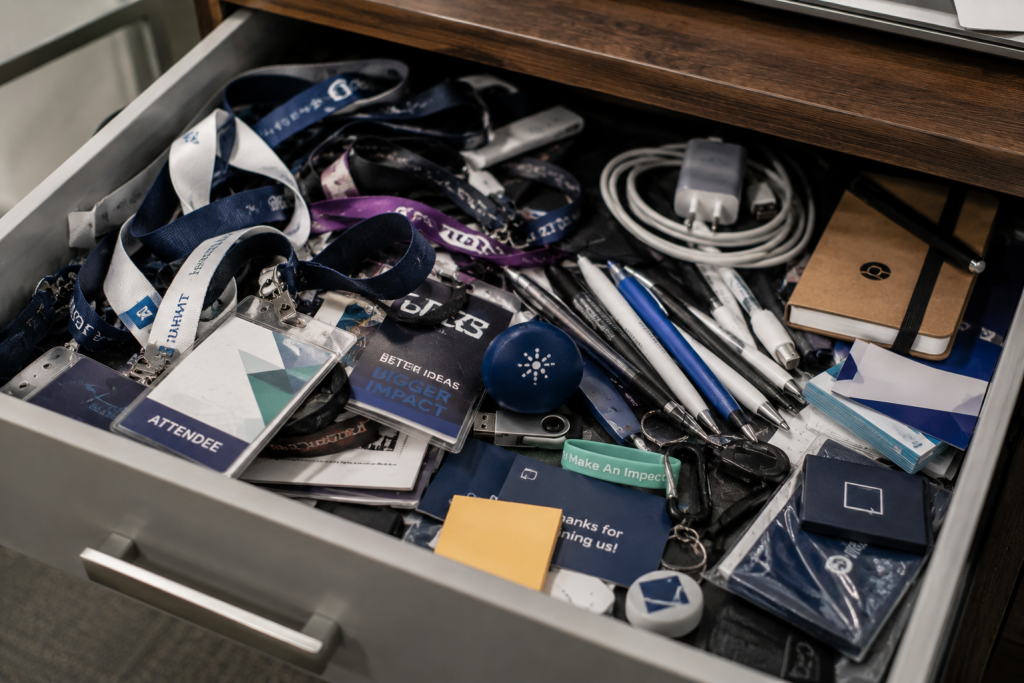
There’s a real downside to getting the fit-for-purpose calculation wrong in the other direction. 72% of consumers believe the quality of a promotional product reflects the reputation of the company that gave it to them. A tote that rips at the handles or a pen that dies after two days doesn’t just fail to generate impressions, it leaves a negative one. It signals that the company didn’t think much about the gift, or about the relationship behind it.
The fix isn’t necessarily “spend more.” It’s “spend appropriately for the purpose,” and then make sure whatever is chosen is genuinely well-made for that purpose.
Employee Merchandise Has Its Own Logic
The stakes are higher for internal programs than for general giveaways. Employees who receive quality branded merchandise stay with their employers about 1.5 years longer on average, and 88% of employees who received branded gifts have remained with their companies for fifteen years or more. 73% report a stronger sense of belonging, and 60% report a more positive view of their employer after receiving quality merchandise. Quality matters to 80% of employees specifically when it comes to branded gifts, and for Gen Z employees, the absence of thoughtful merchandise has a measurable negative effect on their sense of being valued.
For uniform programs, this isn’t a marginal consideration; it’s the entire point. Apparel that fits well and holds up over time turns employees into genuine brand ambassadors. Apparel that’s cheap, stiff, or ill-fitting does the opposite, regardless of how the budget looked on paper.
Building a Distribution Strategy Around Purpose
Once product selection is tied to campaign objective, distribution should follow the same logic rather than defaulting to blanket giveaways:
- Tiered programs reserve premium items for top clients or long-term partners, in proportion to the relationship.
- Milestone and onboarding programs use durable, daily items at hire dates and anniversaries to build lasting associations early.
- Targeted event distribution matters because trade show attendees are 52% more likely to visit a booth offering giveaways — though whether that visit becomes a lasting impression or trash-can fodder depends entirely on whether the item was right for that environment.
- Seasonal campaigns — a jacket at the start of winter, a tumbler at the start of the year, create a relevant moment instead of a random transaction.
The Environmental Case
A 2026 independent study commissioned by ASI and PPAI found that promotional products carry up to eight times less carbon impact per memorized impression than digital advertising. That comparison only holds if the products are kept and used; an item discarded immediately generates environmental cost with none of the marketing return. Choosing items that are genuinely likely to be used, rather than simply choosing more expensive ones, does double duty: better marketing return, smaller footprint.
What to Look For in a Promotional Products Partner
Shifting toward a fit-for-purpose strategy takes more than picking nicer items from a catalog. It takes a partner who can help match products to objectives, manage production quality, and handle the logistics without adding complexity. Look for:
- Product guidance rooted in campaign objectives and audience, not just what’s in stock or cheapest to source.
- Real quality assurance — pre-production proofs, sample approvals, and quality control, since one misprint on a premium item costs more than the item itself.
- Competitive pricing on well-made goods, so that choosing the right item doesn’t require an inflated budget.
- Proactive timeline management that secures production capacity early and avoids rush fees.
- Single-source coordination across apparel, promotional goods, and uniform programs, so multiple vendor relationships aren’t required to execute one strategy well.
A partner who brings all of that to the table makes it realistic to run a fit-for-purpose program at scale, instead of defaulting back to whatever’s easiest to order in bulk.
Frequently Asked Questions
Does a promotional product need to be expensive to be effective? No. The deciding factor is whether the item is fit for purpose; useful enough and well-made enough that the recipient chooses to keep using it. A modest item that earns repeated use will outperform an expensive one that doesn’t.
How long do people keep promotional products? According to PPAI research, nearly nine in ten people keep a promotional product for more than a year, and four in ten keep one for more than a decade. Usefulness is the top reason people cite for keeping an item.
What percentage of consumers remember the brand from a promotional product? 85% of consumers remember the advertiser who gave them a logoed item, according to the 2026 ASI Global Ad Impressions Study, with 90% recalling the brand name and 80% recalling the messaging.
Does product quality affect brand perception? Yes. 72% of consumers say a promotional product’s quality reflects the reputation of the company behind it, which means a poorly made item can create a negative association even when the intent behind giving it was positive.
How should campaign goals influence merchandise selection? Brand awareness campaigns tend to favor broader distribution of useful, lower-cost items; employee onboarding favors durable daily-use items; customer appreciation can support higher per-item spend; trade shows usually call for a balance of reach and memorability. The product should follow from the objective, not the budget alone.
Does quality merchandise affect employee retention? Employees who receive quality branded gifts stay with their employers about 1.5 years longer on average, and a majority report a stronger sense of belonging and a more positive view of their employer afterward.
The Bottom Line
The strongest way to frame this isn’t “premium products are better than cheap products.” It’s closer to:
The best promotional products are the ones people keep, use, and remember, and those aren’t always the most expensive.
That’s a more useful question to bring to any merchandise decision than “what’s our budget per unit.” Whether the right answer is a $2 pen or a $40 jacket depends entirely on what behavior the program is trying to drive, who’s receiving the item, and where it’ll actually be used. Get that match right, and the cost-per-impression math takes care of itself.
IDX works with organizations on exactly this kind of fit-for-purpose merchandise strategy: matching products to objectives, managing quality and production, and consolidating apparel, promotional goods, and uniform programs under one partner. If that’s a conversation worth having, we’re glad to start it.