Anniversary campaign ideas that go beyond celebration can transform milestone moments into powerful drivers of employee engagement, customer loyalty, and long-term brand connection.
Most organizations start searching for anniversary campaign ideas far too late and often treat them as celebratory marketing moments rather than strategic brand opportunities.
But the reality is this: anniversary campaigns are one of the few built-in moments where your brand has permission to be emotional, reflective, and human.
And that matters more than most marketing leaders realize.
In an environment where audiences are overwhelmed with daily messaging, people don’t remember campaigns—they remember moments. Anniversary campaigns, when executed effectively, create those moments across employees, customers, and communities.
The organizations that gain the most value from milestone anniversaries understand that these celebrations are not simply opportunities to look back. They are opportunities to reinforce culture, strengthen customer relationships, and create experiences that people remember long after the anniversary year ends.
What Are Anniversary Campaigns?
Anniversary campaigns are strategic marketing and employee engagement initiatives designed to celebrate organizational milestones while strengthening brand loyalty, company culture, and customer relationships.
Unlike traditional promotional campaigns, anniversary campaigns leverage existing emotional connections to create memorable experiences that reinforce an organization’s history, values, and future vision.
The most effective anniversary campaigns combine storytelling, employee recognition, customer appreciation, and branded experiences to create lasting impact across multiple audiences.
Key Takeaways
Successful anniversary campaigns share several common characteristics:
- They focus on experiences rather than announcements.
- They treat employees as a primary audience.
- They use storytelling to connect the past, present, and future.
- They leverage commemorative merchandise as a long-term memory anchor.
- They execute consistently across every audience and touchpoint.
Organizations that embrace these principles create moments that continue delivering value long after the anniversary celebration has ended.
The Shift from Campaign Thinking to Moment Creation
Traditional marketing is built around reach, frequency, and conversion.
Anniversary campaigns operate differently.
They function more like experiential marketing moments designed to be felt, shared, and remembered.
The data supports this shift.
According to WorldMetrics¹, 72% of consumers report stronger emotional connections after experiential interactions, while 81% say immersive experiences make them more likely to purchase. Seeker² reports that 78% of consumers can recall a brand after a meaningful experience.
This is where anniversary campaigns stand apart.
They naturally lend themselves to experience-driven engagement because they already possess something many campaigns spend significant budgets trying to create: relevance.
Anniversary campaigns are not interruptions.
They are invitations.
Instead of asking audiences to pay attention, they invite people to participate in a story they already feel connected to.
Why Anniversary Campaigns Work: Built-In Emotional Context
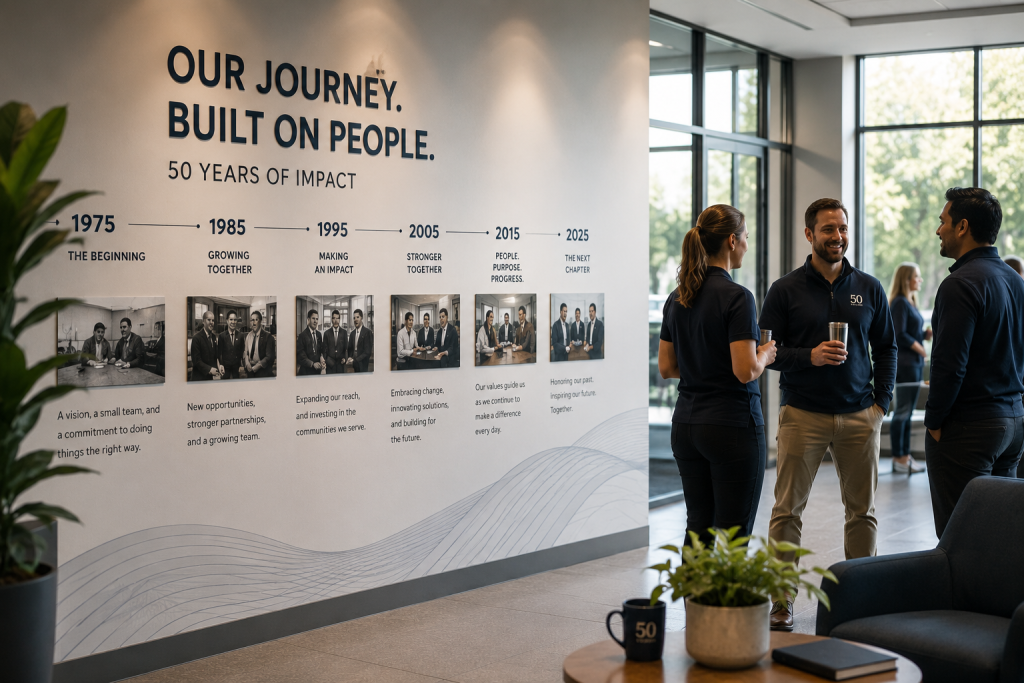
that employees and customers can connect with.
Anniversaries offer something most campaigns struggle to manufacture: authentic emotional context.
They provide:
- A reason to reflect
- A narrative to share
- A milestone worth recognizing
When organizations lean into storytelling—origin stories, growth milestones, challenges overcome, customer success stories, and employee achievements—they tap into nostalgia and authenticity.
The most effective anniversary campaigns do not simply communicate how long an organization has existed.
They communicate why that history matters.
The strongest anniversary campaigns answer three questions:
- Where have we been?
- Who helped us get here?
- Where are we going next?
Those questions transform a celebration into a story, and stories are what people remember.
Anniversary Campaigns as Internal Culture Drivers
One of the most overlooked aspects of anniversary campaigns is their impact on employee engagement and internal branding.
Many organizations focus heavily on external visibility while overlooking the people who helped build the company.
Current engagement statistics reveal a significant opportunity.
According to HiBob³, only 21% of employees globally feel engaged at work. HR Cloud⁴ reports that 62% are not engaged and 17% are actively disengaged. At the same time, highly engaged teams generate 23% higher profitability while also experiencing lower turnover.
For HR leaders and executive teams, anniversaries provide a natural opportunity to:
- Recognize employees
- Reinforce company values
- Celebrate shared accomplishments
- Strengthen emotional connection to the organization
- Support employee recognition initiatives
When executed effectively, anniversary campaigns become more than marketing initiatives.
They become culture-building initiatives.
Employees who feel connected to an organization’s history are often more invested in its future.
Merchandise as a Memory Anchor
In increasingly digital environments, physical brand touchpoints are often underestimated.
But branded merchandise plays a unique role in anniversary campaigns because it acts as a memory anchor.
Research reinforces the value of physical brand experiences.
Gitnux⁵ reports that 85% of people keep promotional products for more than a year, while 74% use them regularly. Brandelity⁶ found that 73% of employees say branded items increase their sense of belonging, and PPAI Research⁷ found that more than half of recipients keep promotional items because of sentimental value.
Unlike digital impressions that disappear in seconds, commemorative merchandise remains visible long after the campaign concludes.
When tied to an anniversary, that value increases significantly.
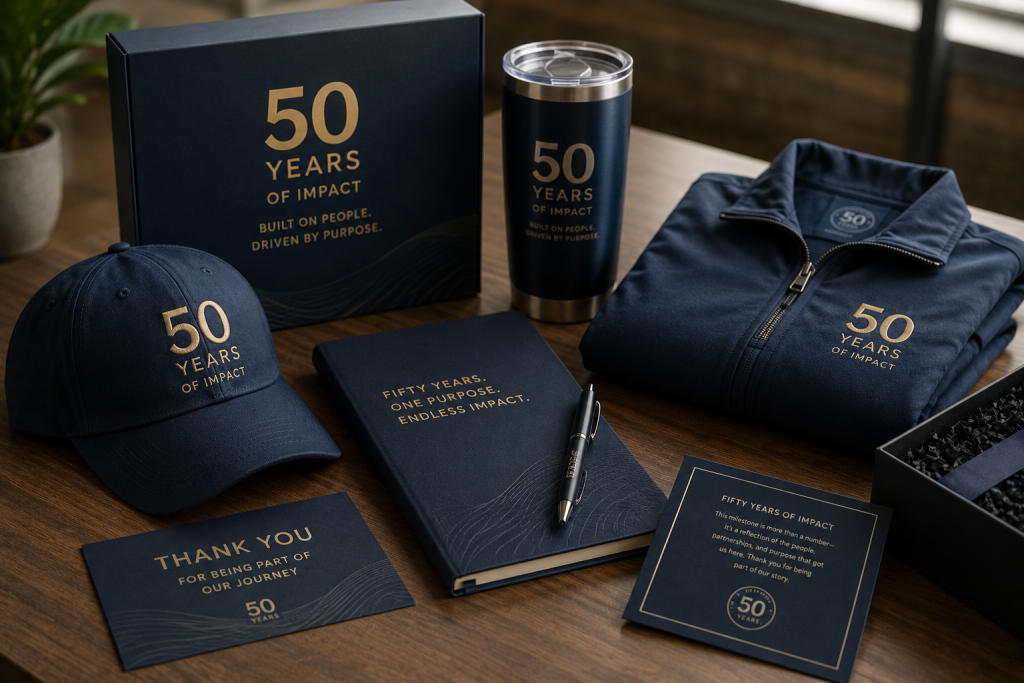
giveaway; it becomes a keepsake.
Limited-edition items, heritage-inspired designs, personalized gifts, anniversary kits, and commemorative awards transform simple merchandise into something people don’t just keep—they care about.
For organizations managing multiple locations, anniversary merchandise programs often extend beyond individual products. Curated anniversary kits can simplify distribution while ensuring a consistent experience across locations and departments.
Programs such as IDX’s custom kitting and swag box solutions can help organizations combine commemorative merchandise, recognition gifts, and milestone messaging into a single coordinated experience.
Learn more here:
https://idxbrands.com/solutions/custom-kitting-and-swag-boxes/
The Complexity of Multi-Location Execution
For organizations with multiple locations, anniversary campaigns introduce a critical operational challenge:
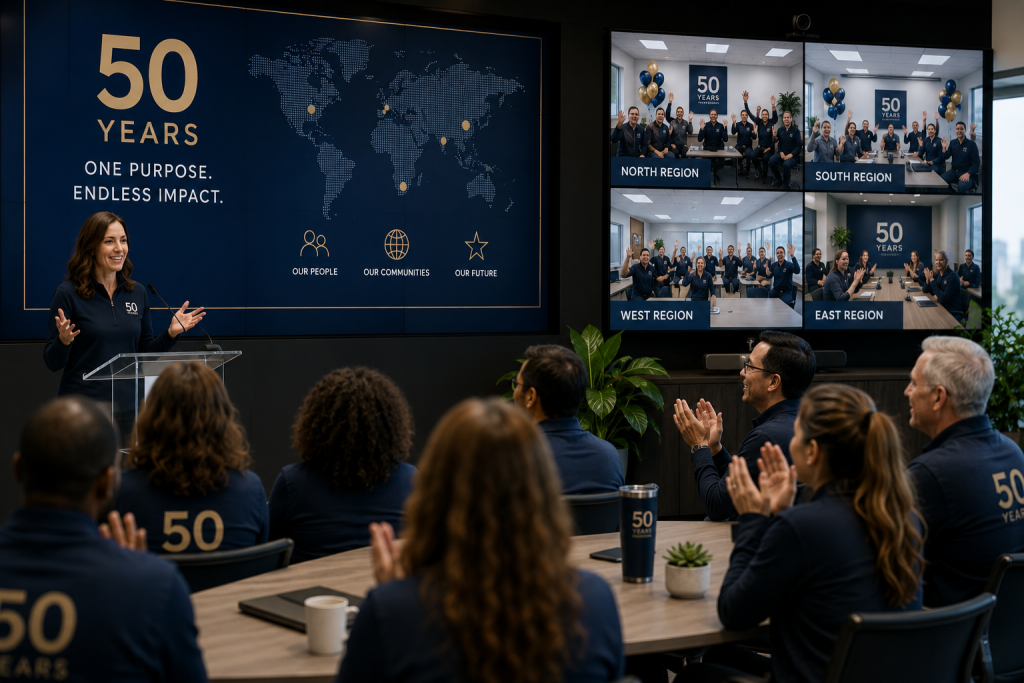
across locations while maintaining a consistent employee experience.
Consistency at scale.
The bigger the organization, the more variables exist:
- Different locations
- Different employee experiences
- Different customer interactions
- Different timelines
Without operational alignment, anniversaries can become fragmented and inconsistent.
Successful organizations approach anniversaries as coordinated rollouts rather than isolated events.
They establish centralized campaign standards while allowing enough flexibility for local execution.
This is where many anniversary campaigns fail—not because of weak creative, but because of inconsistent execution.
Anniversary Campaigns as Storytelling Engines
Every organization has a story.
Anniversary campaigns are one of the rare moments when people actively want to hear it.
Effective campaigns often include:
- Timeline storytelling
- Employee spotlight narratives
- Customer success stories
- Community impact stories
- Behind-the-scenes operational journeys
These elements transform static milestones into meaningful narratives.
More importantly, they create content that fuels social media engagement, public relations efforts, recruitment marketing, customer retention initiatives, and executive thought leadership long after the anniversary itself has passed.
What Most Brands Get Wrong
Despite the opportunity, many anniversary campaigns fall short because of predictable mistakes.
Treating It as a Date Instead of a Moment
A single-day announcement rarely creates lasting impact.
Overemphasizing External Audiences
Employees are often the most important audience—and the most overlooked.
Underinvesting in Design and Merchandise
Low-quality experiences diminish emotional significance.
Ignoring Operational Complexity
Execution gaps weaken otherwise strong campaigns.
Missing the Storytelling Opportunity
Without narrative, anniversaries become forgettable.
Frequently Asked Questions About Anniversary Campaigns
What makes a successful anniversary campaign?
A successful anniversary campaign combines storytelling, employee engagement, customer recognition, and memorable brand experiences that create emotional connections rather than simply celebrating a date.
When should companies start planning an anniversary campaign?
Most organizations should begin planning 12–24 months before a major anniversary to allow time for strategy, creative development, merchandise sourcing, event planning, and execution.
Why is branded merchandise important in anniversary campaigns?
Commemorative merchandise serves as a physical reminder of the milestone and reinforces emotional connections long after the campaign ends.
How can multi-location organizations maintain consistency?
Organizations should establish centralized campaign standards while allowing localized flexibility through standardized assets, fulfillment programs, and operational planning.
Final Thought: Moments That Outlast Campaigns
In a crowded marketing landscape, attention is fleeting.
Meaning lasts.
Anniversary campaigns, when approached strategically, create shared moments that employees remember, customers connect with, and communities recognize.
And those moments compound over time.
Because in the end, people may forget what your campaign said.
But they won’t forget how it made them feel.
Sources & References
¹ WorldMetrics – Experiential Marketing Statistics
https://worldmetrics.org/experiential-marketing-statistics/
² Seeker – Consumer Experience Research
https://products.seeker.io
³ HiBob – Employee Engagement Statistics
https://www.hibob.com/blog/employee-engagement-statistics/
⁴ HR Cloud – Employee Engagement Research
https://www.hrcloud.com/blog/employee-engagement-statistics/
⁵ Gitnux – Promotional Products Statistics
https://gitnux.org/promotional-products-statistics/
⁶ Brandelity – Employee Recognition & Branded Merchandise Research
https://www.brandelity.com
⁷ PPAI Research
https://www.ppai.org