What Is an Employee Store?
An employee store (sometimes called a company store or branded merchandise portal), is a dedicated platform where employees can browse, select, and order branded merchandise. It may be fully employer-funded, employee-funded, or a hybrid model where employees use an allowance toward a broader catalog.
Employee stores have become one of the most operationally efficient ways to run a branded merchandise program at scale. Rather than centralized ordering and distribution, they push selection and fulfillment to the individual level: reducing waste, improving employee satisfaction, and eliminating the logistical overhead of size-guessing and kit standardization for every employee.
According to a study by the Advertising Specialty Institute, 85% of people who receive promotional products remember the advertiser who gave it to them. Branded merchandise generates more impressions per dollar than almost any other marketing channel. For internal audiences, the impact is similar: merchandise that employees choose for themselves has significantly higher utility and retention than merchandise chosen for them.
Why Organizations Build Employee Stores
The case for an employee store over a traditional centralized merchandise program comes down to three factors: efficiency, experience, and data.
Efficiency. Centralized kit programs require someone to select sizes, track preferences, manage fulfillment exceptions, and process returns. At 100 employees, this is manageable. At 1,000, it’s a part-time job. Employee stores shift that operational burden to a platform — and to employees themselves. The right store solution centralizes purchasing, leverages buying power, and saves significant time administering programs internally.
Experience. Employees who choose their own merchandise are more satisfied with it. Satisfaction drives utilization, and utilization drives brand visibility. A pullover an employee selected is worn. A pullover someone guessed at in a medium sits in a drawer.
Data. Employee stores generate rich behavioral data: what employees browse, what they select, what they abandon, what sizes they order. This data improves future purchasing decisions, informs product assortment, and provides the participation and preference visibility that centralized programs rarely capture.
Step 1: Define Your Program Model
Before evaluating platforms or selecting products, define the commercial model. There are three primary approaches:
Employer-funded: Employees receive an allowance (annual, quarterly, or event-triggered) to spend in the store. The organization covers the cost. Best for recognition programs, milestone rewards, and new hire allowances.
Employee-paid: Employees purchase merchandise at cost or near-cost through a subsidized store. The organization handles procurement and fulfillment; employees pay for what they want. Best for organizations with strong brand affinity and employees who actively want branded merchandise.
Hybrid: Employees receive a base allowance and can purchase additional items out of pocket. The most flexible model and increasingly the most common in larger organizations.
The model you choose determines your budget structure, platform requirements, and how you communicate the program to employees. Note that your checkout process, including shipping, payment, and approval settings, can and should be configured to match whichever model you select.
Step 2: Define Your Product Assortment

Assortment strategy is where most employee store programs make their first significant mistake: starting with too many SKUs.
A broad assortment feels like generosity. In practice, it creates inventory complexity, increases carrying costs, and dilutes the items that actually matter. The most effective employee stores launch with a focused assortment, 15 to 30 SKUs across two to four product categories, and expand based on data.
Apparel is the anchor category for most stores. One to two outerwear options, one to two mid-layers, and two to three casual tops is a reasonable starting point. Prioritize quality over variety.
Drinkware has consistently high conversion rates in employee stores. A quality insulated bottle or tumbler is one of the highest-utility branded items available.
Bags and carry, including backpacks, totes, laptop sleeves, are high-visibility, high-utility, and frequently used outside the office.
Desk and office, including notebooks, tech accessories, and organizers, perform well in knowledge-worker environments.
Resist the temptation to add categories because products are available. Add categories because your employees want them, and let your store data tell you when. Browse IDX’s full product catalog → to explore top-tier branded merchandise your team will actually use.
Step 3: Select a Platform

Employee store platform selection is a significant decision with long-term operational implications. The right platform depends on your program model, technical environment, and scale. It should also be customizable from storefront to back-end workflows to fit your organizational structure.
Key criteria to evaluate:
HRIS integration. Can the platform connect to your HR system to manage allowances, authenticate employees, and trigger events (new hire enrollment, work anniversaries, etc.) automatically? Manual administration at scale is a program killer.
SSO support. Employees won’t use a store that requires a separate login. Single sign-on is a non-negotiable for adoption, and it should let you control what each team can access, from individual products to approval capabilities.
Budget and access controls. The best platforms let you assign budgets and coupon codes per user group, and manage multiple brands from the same storefront, giving you flexibility without operational chaos.
Inventory management. Does the platform give you real-time inventory visibility? Can you set reorder thresholds and low-stock alerts? Stockouts in an employee store erode trust and drive abandonment.
Fulfillment integration. How does the platform connect to your fulfillment operation, whether in-house, 3PL, or vendor-managed? Order accuracy and shipping speed are direct measures of employee experience.
Reporting and analytics. Can you see participation by department, location, and employee segment? Can you track conversion rates, popular items, and abandoned sessions? Custom reporting capabilities, integrated with your existing tech stack, are what separate a store that improves over time from one that doesn’t.
Global capability. If you have employees in multiple countries, the platform needs to handle multi-currency, multi-language, duties, and customs without manual intervention.
IDX’s company store platform is built with all of these criteria in mind. From custom integrations with your tech stack to granular user access controls, the platform is designed to give you flexibility and visibility at every level. Request a demo →
Step 4: Build Your Fulfillment Architecture
The platform is the front end. Fulfillment is the back end, and where employee experience is actually delivered or broken.
On-demand vs. pre-stocked inventory. On-demand fulfillment (items produced when ordered) offers flexibility and eliminates overstock risk but introduces longer lead times. Pre-stocked inventory ships faster but requires capital commitment and inventory management. Most employee stores use a hybrid: pre-stock high-velocity core items, use on-demand for specialty or low-volume SKUs.
Domestic vs. global shipping. For US-based programs, domestic carrier selection (and carrier redundancy) is a manageable decision. For global programs, the complexity of duties, customs documentation, and last-mile carrier performance by country requires dedicated planning.
Packaging and unboxing. How an order arrives matters. Branded packaging, tissue paper, and a simple insert elevate a fulfillment moment into a brand moment. The incremental cost is low; the impression impact is not.
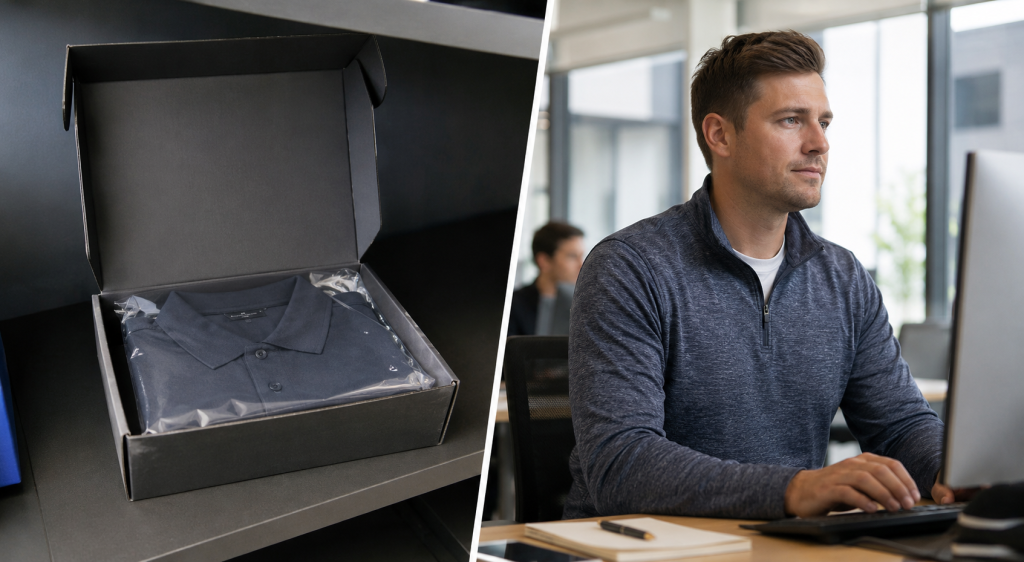
Returns and exchanges. Apparel generates returns. Build a simple, employee-friendly exchange process before launch, not after the first complaint.
Step 5: Launch and Drive Adoption
An employee store that employees don’t know about or don’t use is an operational investment with no return.
Communication strategy. Launch communications should explain the what, the why, and the how, in that order. What is the store and what’s available. Why the organization invested in it. How employees access it and what their allowance covers.
Manager activation. Managers are the highest-leverage communication channel in most organizations. A manager who mentions the store and shares their own order experience drives more adoption than any email campaign.
Onboarding integration. New hires are your highest-engagement moment. Connecting the employee store to onboarding, either as a first-order experience or as a supplement to a physical kit, captures employees when brand connection is highest.

Ongoing promotion. Stores that launch and go quiet lose momentum. Seasonal updates, new product announcements, and pop-up stores for team rewards and milestone moments maintain engagement over time.
IDX supports the full launch process, from business-driven strategy and custom store creation to transition support and training, so your team can manage the store with confidence.
Step 6: Measure, Learn, and Optimize

The metrics that tell you whether your employee store is working:
- Participation rate: Percentage of eligible employees who have placed at least one order
- Active user rate: Percentage who have ordered in the last 90 days
- Average order value: Useful for assortment and allowance calibration
- Top SKUs by volume and revenue: Your assortment roadmap
- Abandoned sessions: Signal of product, pricing, or UX friction
- Fulfillment accuracy and on-time delivery: The direct measures of employee experience
Review these metrics quarterly in year one. Use them to make one to two assortment or operational changes per cycle. The stores that improve fastest are the ones with a structured review cadence, not the ones with the largest initial launch investment. IDX’s platform provides custom analytics and reporting built around how your organization actually works, giving you the user engagement insights you need to make those calls with confidence.
The Bigger Picture
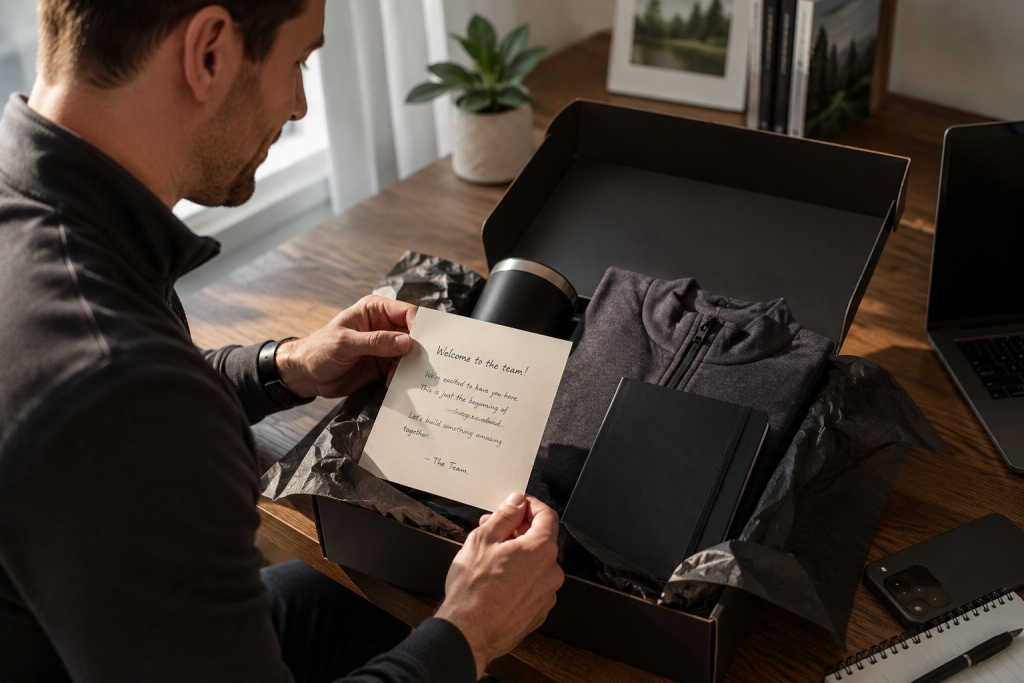
An employee store is infrastructure. The organizations that build it well find that it becomes the operational foundation for recognition programs, milestone gifting, event merchandise, and new hire kitting, all running through a single platform, a single vendor relationship, and a single data stream.
The organizations that build it as a one-time project find themselves rebuilding it every time the program evolves.
Build Your Store with IDX
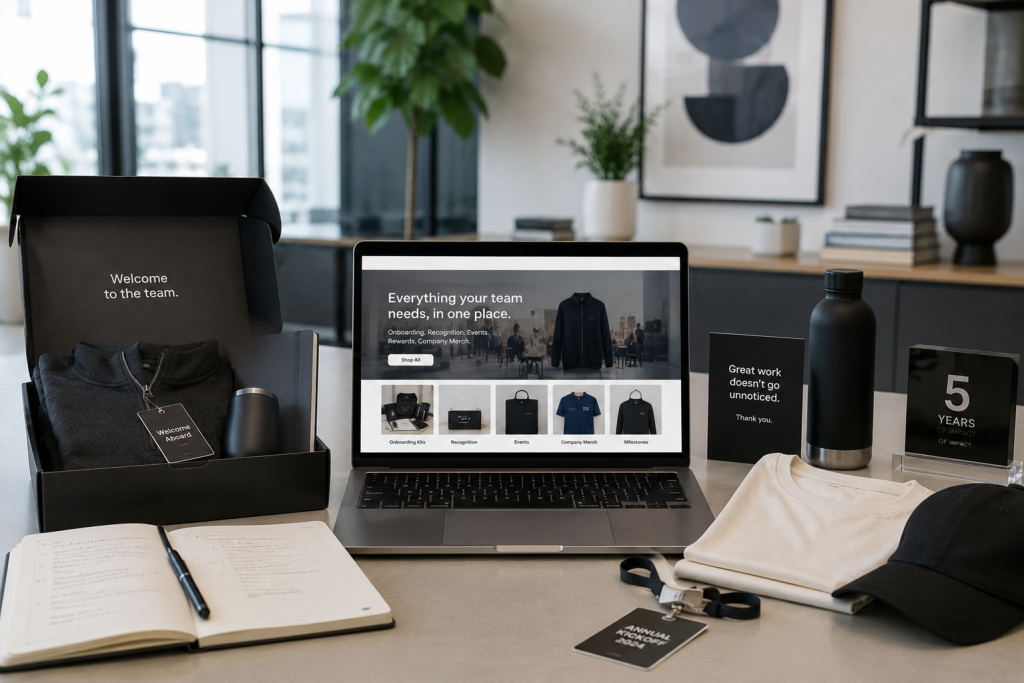
IDX designs and operates employee store programs for HR and marketing teams, from platform selection and product curation to fulfillment and ongoing optimization. With more than 30 years of experience, IDX collaborates closely with your team to shape a webstore around your business objectives, bring your brand to life with a fully integrated storefront, and support you through every stage of launch and growth.
No matter how many locations your company has, you’ll get a seamless, consistent experience, with the flexibility, control, and insight to improve it over time.
Learn more about IDX company store solutions → Request a demo →