Trade show experience design treats an exhibit not as a static display of products and giveaways, but as a connected sequence of touchpoints that begins before attendees arrive and continues long after the show floor closes. For Marketing Directors and Event Marketing Managers planning their 2026/2027 calendars, this distinction matters more than ever. The average exhibitor now spends around $24,000 per show, and trade shows command roughly 31.6% of total marketing budgets; numbers that make “a table with some banners and pens” an indefensible strategy.
That investment is paying off, but only when the program is treated as more than a logistics exercise. More than half of business leaders (52%) believe trade shows deliver the highest ROI of any marketing channel, and the channel generates an average return of $20.98 for every dollar spent. But that ROI doesn’t come from foot traffic alone; it comes from designed experiences that attendees remember, talk about, and act on.
Why “Booth Design” Is the Wrong Frame
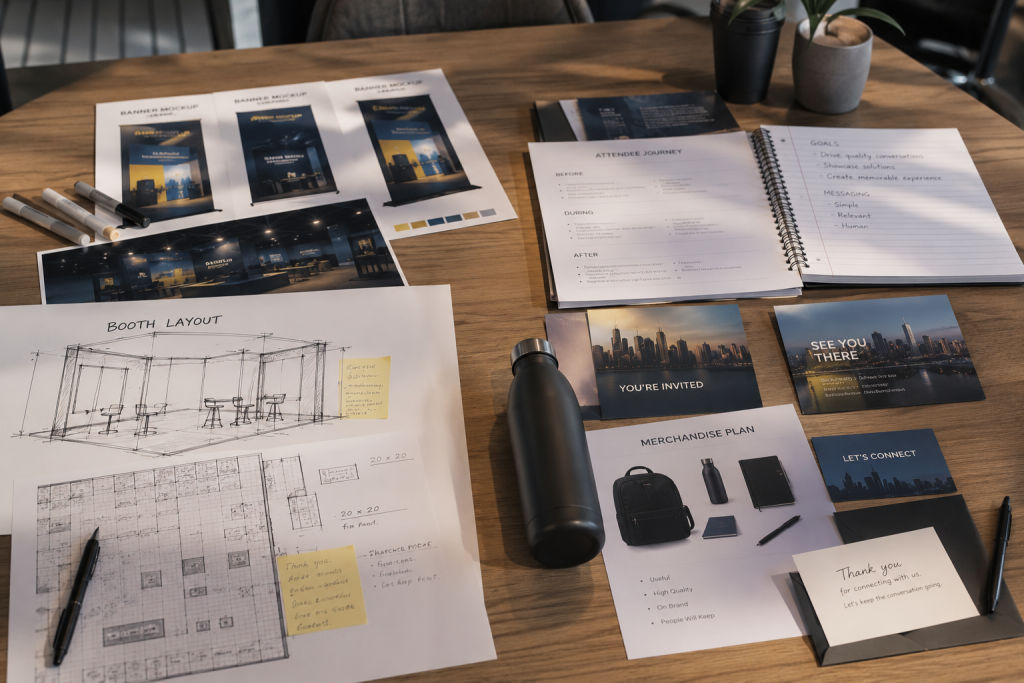
Most exhibitors still think in terms of booth design: layout, signage, lighting, furniture. These are real considerations, but they describe a container, not an experience. An experience has a beginning, middle, and end, and most trade show programs only design for the middle.
This is a costly oversight. Research shows that 81% of trade show attendees arrive with the authority to buy, meaning the people walking the floor are decision-makers, not browsers. If your program only “activates” during the three days of the show, you’re meeting high-value buyers at a single touchpoint instead of a relationship arc.

The Experience Loop Framework
IDX uses a simple model to help marketing teams reframe their event programs: the Experience Loop. It breaks the attendee relationship into three connected phases, each with its own goals, merchandise strategy, and success metrics.
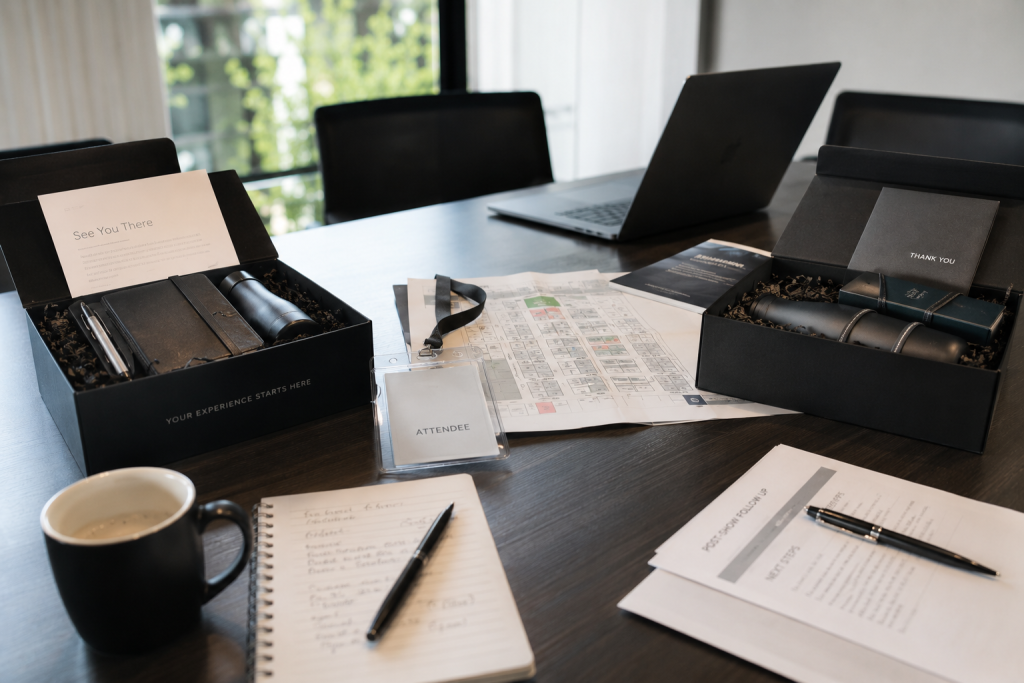
| Phase | Goal | Merchandise Role | Example Tactics |
| Before the Event | Build awareness, secure meetings, create anticipation | Sets expectations and opens doors | ABM mailers, VIP kits, speaker gifts |
| During the Event | Create memorable, story-worthy interactions | Reinforces brand and drives booth traffic | Interactive demos, tiered giveaways, collectible items |
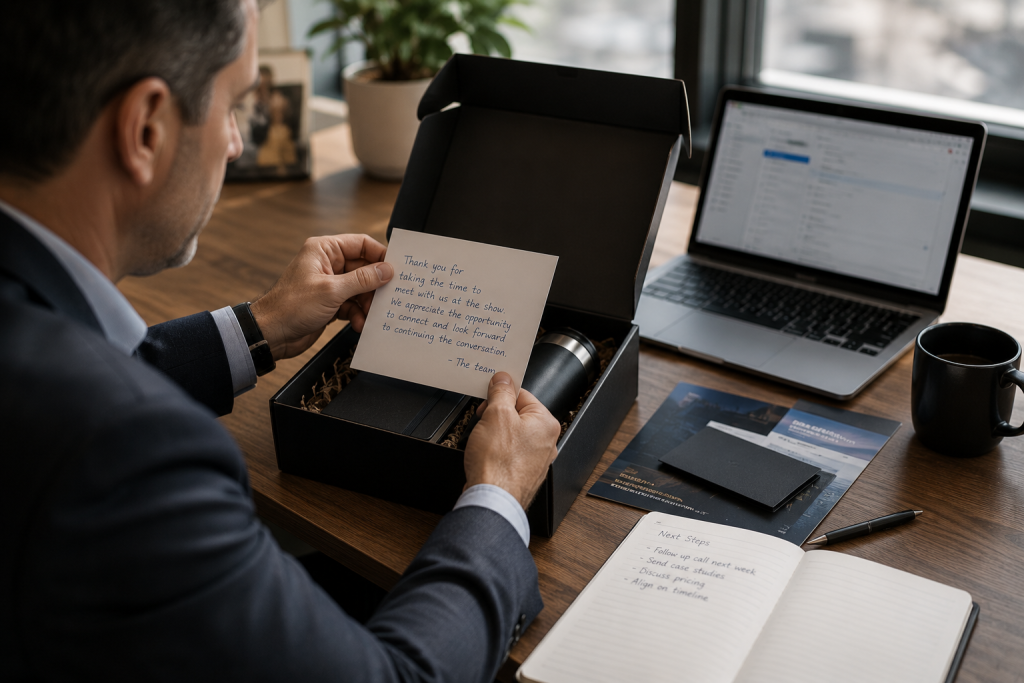
| After the Event | Extend the relationship, accelerate follow-up | Reminds and reinforces decisions | Thank-you kits, executive gifts, sales follow-up packages |
The power of the Experience Loop isn’t in any single phase, it’s in the connections between them. A prospect who receives a thoughtful pre-show mailer, has a memorable booth interaction, and then receives a relevant follow-up gift experiences a single continuous narrative rather than three disconnected touchpoints. That continuity is what turns a booth visit into a remembered brand relationship.
What “Designing for Experience” Actually Looks Like
Shifting from booth design to experience design means asking different questions during the planning process. Instead of “What should our booth look like?”, teams should ask:
- What does the attendee feel before they arrive? Anticipation, curiosity, or nothing at all?

- What story does the booth interaction tell? Is there a clear beginning, a moment of engagement, and a takeaway?
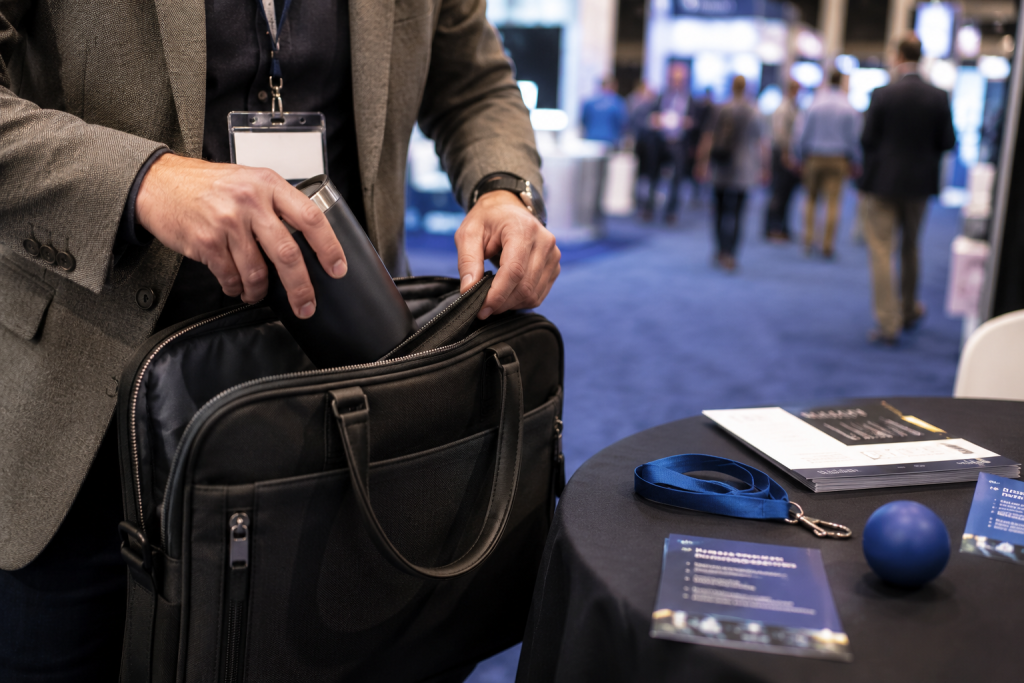
- What happens in the attendee’s bag the next morning? Does anything from your booth survive the trip home?
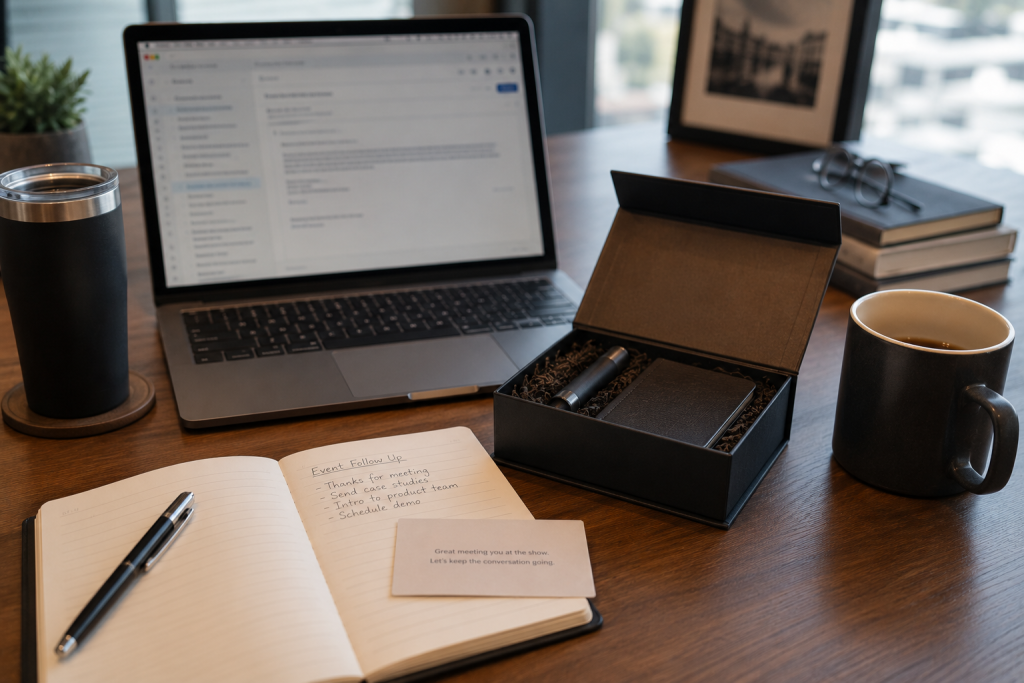
- What does the attendee receive in the two weeks after the show? Is there a follow-up that reinforces the relationship, or does the thread go cold?
- How can branded merchandise augment the prospect or client experience at each phase, not just fill a giveaway table, but actively carry the story forward before, during, and after the show?
These questions reveal a hard truth in the data: ShowHero’s 2026 industry analysis found that companies in the $25K–$60K exhibitor budget range spend an average of 9% of their budget on giveaways but less than 5% on pre-show meetings, even though attendees consistently say pre-show outreach and substantive conversation matter more than giveaways. Experience design means rebalancing that allocation around the full loop, not just the booth floor.
A Quick Self-Assessment Checklist
Before your next event, walk through this checklist with your team:
- Do we have a defined pre-event touchpoint (mailer, invite, VIP kit) for our highest-priority accounts?
- Does our booth experience have a clear “moment”, something attendees can point to and describe to colleagues?
- Have we identified which merchandise items are designed to be carried home vs. used on-site?
- Is there a follow-up plan and timeline for leads captured at the booth?
- Are different attendee types (general, qualified lead, customer, executive) receiving different experiences?
- Have we connected our merchandise choices to a single narrative or theme across all three phases?
If more than two of these are unchecked, your program is likely still operating in “booth design” mode rather than “experience design” mode.
Why This Matters for ROI Conversations
CMOs are under increasing pressure to justify event spend with hard numbers, and “brand exposure” alone is a weak argument in a budget meeting. Experience design gives marketing teams a structural advantage here: when merchandise and touchpoints are mapped to the Experience Loop, it becomes possible to measure engagement at each phase: open rates on pre-show mailers, booth interaction data, and follow-up response rates, rather than relying on vague impressions of “a good show.”
This is also where IDX’s role shifts from vendor to partner. Rather than fulfilling a last-minute order for 500 tote bags, an experience-design approach means working through the full loop together: identifying what pre-show items will land with VIP accounts, what on-site merchandise creates a story worth repeating, and what post-event follow-up gifts extend the relationship into the sales cycle.
Frequently Asked Questions
How do I create a memorable trade show experience? Start by mapping your program across the full Experience Loop: before, during, and after the event, rather than focusing only on the booth itself. Identify one clear “moment” attendees will remember, choose merchandise that supports that moment (and that attendees will actually take home), and build a follow-up plan that continues the relationship after the show ends.
How do brands increase engagement at trade shows? Brands increase engagement by personalizing the experience for different attendee types, creating interactive or hands-on elements rather than passive displays, and ensuring merchandise solves a real problem the attendee has (see our companion article on the Airport Test). Engagement also increases significantly when pre-show outreach sets expectations and post-show follow-up reinforces them.
What’s the difference between booth design and experience design? Booth design focuses on the physical space: layout, signage, furniture. Experience design treats the booth as one part of a longer attendee journey that includes pre-event outreach and post-event follow-up, with merchandise and messaging connected across all three phases.
How much of my budget should go toward pre- and post-event activities vs. the booth itself? While there’s no universal ratio, industry data suggests most exhibitors currently underinvest in pre-show engagement relative to what attendees say drives their decisions. Marketing teams should treat pre- and post-event touchpoints as core program elements with dedicated budget, not afterthoughts funded from what’s left over.
Explore IDX Event Services
Ready to design your next event around the full Experience Loop? Explore IDX’s branded merchandise and event solutions to see how we support pre-event kits, on-site merchandise, and post-event gifting as one connected program.