An enterprise buyer’s guide to a procurement blind spot that only shows up during growth
The Promise of Bulk Purchasing
When an organization decides to place a large uniform order, the logic is straightforward. Buying in bulk is supposed to deliver:
- Better per-unit pricing
- Simplified purchasing, with fewer transactions to manage
- Consistent branding across every employee and location
- Inventory security, so new hires are never left waiting
- Easier onboarding, with uniforms ready on day one
- Fewer purchase orders for procurement and finance to process
These are reasonable expectations. A large order, placed well in advance, should be the more efficient path, and for many organizations, it is.
What many organizations don’t realize is that these benefits depend just as much on the supplier’s production model as the size of the order.
Executive Hook
Most procurement leaders can quote their uniform program’s unit cost down to the cent. Far fewer can answer a more important question: how much can your supplier actually produce at once, and what happens when your order exceeds that number?
That question rarely comes up during vendor selection. It doesn’t need to… until a company opens a new facility, wins a large contract, completes an acquisition, or hires faster than a forecast predicted. That’s when a bulk uniform order placed months in advance arrives in pieces instead: 250 units this month, 300 the next, the remainder “as production allows.”

The purchase order said 2,000 units. The supplier eventually delivers 2,000 units. But in between, new hires wait. Brand consistency erodes. An operations team that budgeted for one efficient transaction ends up running a drawn-out logistics project instead.
This is waterfall production. A supplier accepts one bulk order, then manufactures and delivers it in phases, because their capacity (not the customer’s demand), sets the pace. Suppliers rarely disclose this upfront. It isn’t malicious, and it almost never shows up in the original quote. It simply happens when an order outgrows a supplier’s operational model. Most enterprise buyers discover it only after they’ve already signed.
A simple example: a company orders 2,000 uniforms. Instead of producing all 2,000 at once, the supplier delivers 250 this month, 300 next month, and the remaining quantities as production allows. The customer bought in bulk. The supplier produced in phases.
Why This Matters More Than It Used To
Uniform and branded apparel programs used to be a static line item: order once a year, replenish as needed, move on. That’s no longer true for organizations with 500 or more employees.
Three forces now make production capacity, not price per unit, the variable that decides whether a uniform program actually works:
Hiring has become less predictable. Seasonal staffing spikes, fast facility openings, and volatile labor markets mean uniform demand rarely follows the smooth, evenly-spaced pattern a traditional production schedule assumes.
Growth increasingly comes from acquisition, not just organic hiring. When an organization acquires a division, a location, or a workforce, it often needs hundreds or thousands of units on a compressed timeline, one that has nothing to do with a supplier’s normal production cadence.
Brand consistency now matters to HR and marketing, not just aesthetics. Inconsistent uniforms during onboarding aren’t a minor visual issue anymore. They send new employees and customers a signal about how well the organization runs.
Put simply: the organizations most likely to place a large uniform order are also the ones most likely to need it fast, all at once, with no warning. That combination is exactly where waterfall production does the most damage, and exactly why it needs to be part of any enterprise uniform program strategy from the start.
Root Causes: Why This Keeps Happening
Waterfall production isn’t one vendor’s failure. It’s a structural byproduct of how most uniform suppliers operate, and how most enterprise buyers evaluate them.
Production Capacity Is Invisible in the RFP Process. Requests for proposal typically ask about pricing tiers, sample garments, decoration options, and delivery timelines for a first order. They rarely ask a supplier to demonstrate how they’d fulfill a full annual program upfront. They rarely ask about manufacturing throughput under load. A supplier can quote an attractive price on 2,000 units without anyone asking whether they can produce 2,000 units in one cycle.
Suppliers Are Built for Single Orders, Not Standing Inventory. Many promotional and uniform vendors run a made-to-order model. They don’t manufacture until a customer places a purchase order. They don’t warehouse finished goods, because that requires capital, space, and forecasting infrastructure most vendors haven’t built. That model works fine for small, one-time orders. It breaks down the moment volume or urgency increases.
Buyers Conflate Order Size With Operational Readiness. A large purchase order feels like a strategic, consolidated decision. But placing one big order doesn’t change how a supplier manufactures. It only changes how much they now have to squeeze through the same constrained capacity. The customer’s planning got more sophisticated. The supplier’s production model didn’t.
No One Owns the Capacity Question Internally. Procurement owns cost. HR owns onboarding experience. Operations owns receiving and logistics. Waterfall production’s consequences spread across all three departments. That means no single stakeholder sees the whole problem, or has the authority to demand a different answer from the supplier.
The Hidden Costs & Business Impact
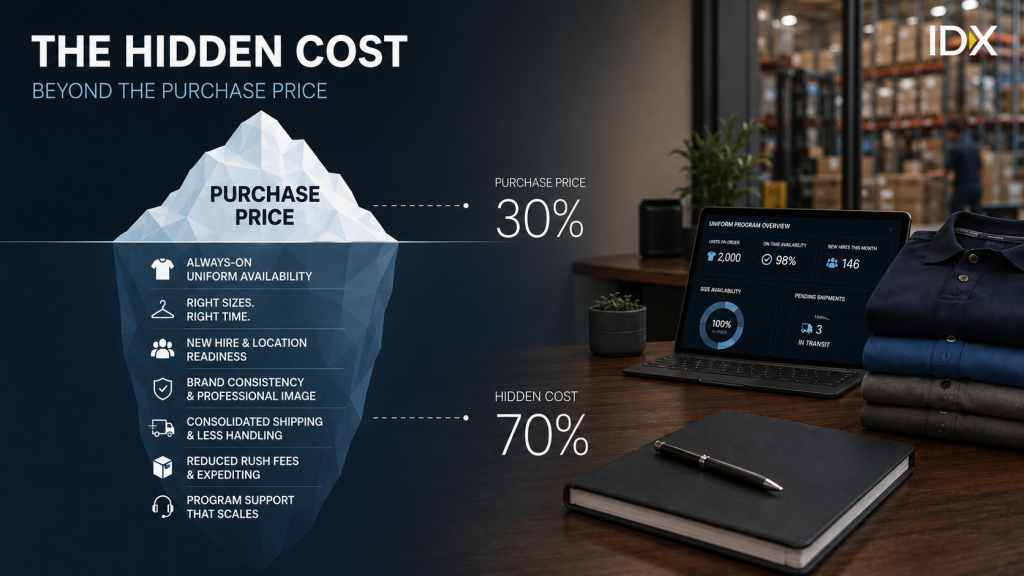
The sticker price of a uniform program rarely shows where the real cost lands. When production happens in waterfall fashion, that cost migrates into places most budgets don’t track.
Repeated Production Overhead. A single efficient production run turns into several smaller ones. Each run requires its own embroidery setup, scheduling, quality control pass, and labor allocation. The supplier pays those fixed costs multiple times, even though they billed the customer for one order.
Compounding Freight Costs. One consolidated shipment becomes several partial shipments. Rush freight often gets added when a delayed batch needs to catch up to a hiring deadline. Split deliveries also mean more receiving events, more staging, and more handling labor for the customer’s team, costs that never appear on the supplier’s invoice but absolutely hit the operations budget.
Multiplying Administrative Load. Instead of one purchase order, one invoice, and one reconciliation, procurement and finance teams now manage a rolling series of partial shipments, partial invoices, and status checks, often for months. Bulk ordering was supposed to simplify purchasing. Waterfall production does the opposite.
Inventory Inconsistency and the Employee Experience. When certain sizes or components run out, new hires start in mismatched or incomplete uniforms, sometimes for weeks. For a company investing in a polished onboarding experience, or a customer-facing role where uniforms signal brand quality, this failure is visible, and it repeats. A spreadsheet never captures it.
Growth Rate-Limited by the Supplier, Not the Business. This is the most consequential cost, and the least discussed one. In a waterfall model, a supplier’s production line (not hiring speed or operational readiness), decides how fast the organization can open a new location, staff up for a season, or integrate an acquired workforce. A company can be fully ready to scale. Its uniform program can hold it back anyway.
The Strategic Inventory Model

The fix isn’t to stop buying in bulk. The fix is to check whether a supplier’s operational model can actually support a bulk strategy before you sign, and to plan for capacity instead of discovering the gap under pressure.
A real enterprise uniform program strategy differs from waterfall production in four specific ways:
Demand forecasting comes first. The supplier doesn’t wait for a single purchase order. They work from hiring projections, seasonal patterns, and growth plans to anticipate volume before anyone needs it, including hiring surges and known expansion timelines.
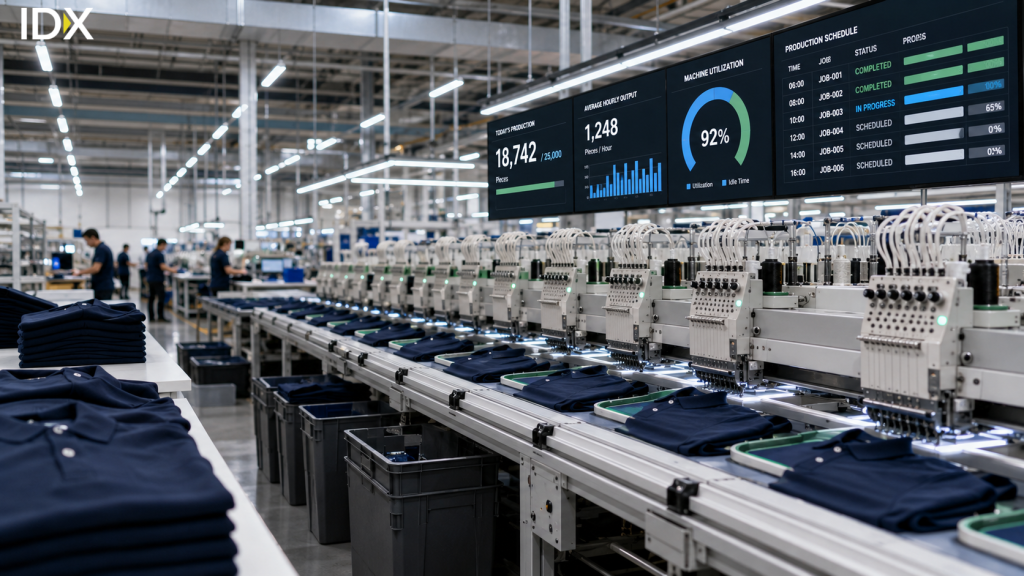
Manufacturing happens in efficient, full-volume runs. Instead of repeated small batches, the supplier produces the program at the scale the forecast calls for. That captures the setup and labor efficiencies bulk purchasing was supposed to deliver in the first place.
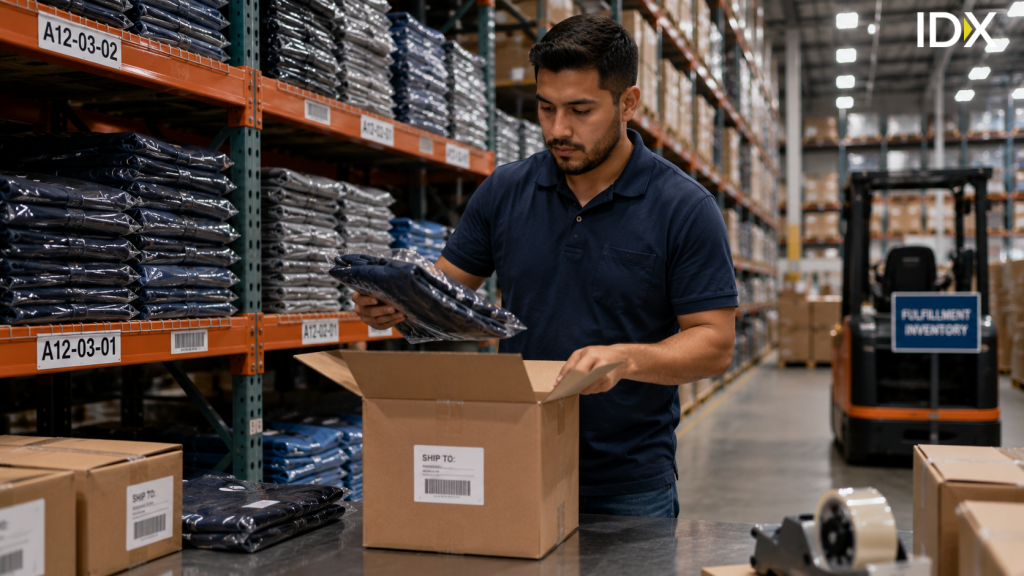
The supplier warehouses finished inventory instead of queuing orders. Once they produce the uniforms, they hold them in stock and ship on demand. A new hire starting next week draws from existing stock, no new production cycle required.

Replenishment follows a plan, not improvisation. The supplier sets reorder points, safety stock levels, and seasonal buffers in advance. Unexpected growth draws down an existing buffer instead of exposing a production gap.

The practical test is simple. Ask the supplier to walk through, in specific operational terms, how they’d produce and fulfill your full annual program on a 30-day timeline instead of 12 months. A supplier with genuine production and warehousing capacity answers with specifics: inventory levels, production throughput, warehouse locations. A supplier running a waterfall model answers with reassurance instead.
Where the Savings Actually Come From
This is also where the real savings of bulk purchasing live, and it’s rarely the unit price. Total cost of ownership on a uniform program includes:
- Manufacturing efficiencies from full-volume production runs
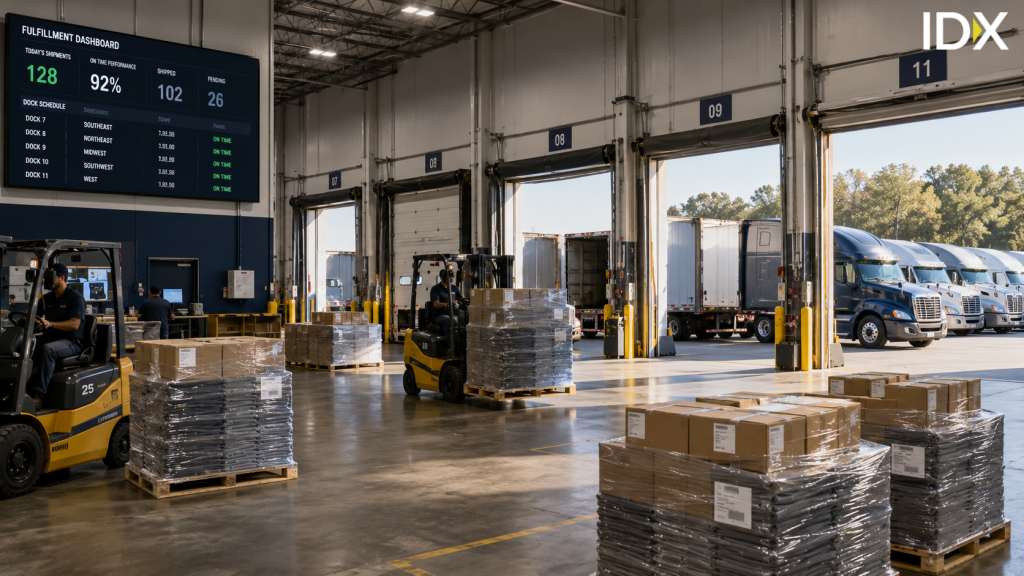
- Reduced freight from consolidated shipping
- Lower administrative costs from fewer invoices and reconciliations
- Predictable budgeting instead of a rolling series of partial costs
- Faster, more consistent onboarding
- Fewer stockouts and substitutions
- Less operational disruption during growth
A supplier that has invested in forecasting and warehousing infrastructure can often deliver a lower total cost even at a comparable or slightly higher unit price. Every downstream cost category shrinks.
Questions Every Organization Should Ask Their Supplier
Before signing a bulk uniform contract, ask the supplier to answer these directly, and be wary of any answer that stays vague:
- Can you manufacture our full annual program upfront, or only in response to individual purchase orders?
- Do you warehouse finished inventory, or only produce to order?
- What is your actual production capacity, and how does that compare to the size of our order?
- How do you forecast replenishment and set reorder points?
- How do you support a sudden hiring surge or new facility opening?
- What happens if our growth exceeds the original forecast?
- Can you fulfill immediately from existing inventory, or does every order restart the production clock?
- How do you consolidate freight to avoid repeated partial shipments?
A supplier with genuine capacity will answer with specific numbers: inventory levels, production throughput, warehouse locations, and lead times. A supplier without it will answer with reassurance instead of detail.
Conclusion
The issue isn’t whether an organization should buy uniforms in bulk. The real question is whether the supplier can actually support a bulk purchasing strategy.
If production must occur over months because of supplier capacity constraints, many of the efficiencies bulk purchasing was supposed to deliver are lost before the first shipment arrives. Organizations should evaluate uniform partners not only on price, but on production capacity, inventory strategy, fulfillment capability, and their ability to support future growth.
Is Your Uniform Program Built to Scale?
If your supplier is producing and delivering your bulk orders in phases, it may be time to evaluate the total cost of your current model. A strategic inventory program can improve fulfillment speed, reduce operational costs, and ensure your uniform program grows alongside your business.
FAQ
What is waterfall production in uniform or branded apparel programs? A supplier accepts one large order, then manufactures and delivers it in incremental phases over an extended period. Production capacity or warehousing limitations prevent them from fulfilling the full quantity at once.
Why does a bulk uniform order sometimes still take months to arrive? If a supplier doesn’t hold finished inventory and only manufactures after you place a purchase order, a large order just means more units queued into the same limited capacity. That extends the timeline instead of compressing it.
How can procurement teams evaluate a supplier’s true production capacity before signing a contract? Ask the supplier to describe, with specific numbers, how they’d produce and deliver a full annual program on a compressed timeline, including manufacturing throughput, warehousing capabilities, and their forecasting process. Vague reassurance is a warning sign. Specific operational detail is not.
Is a strategic inventory model more expensive than a standard bulk order? Not usually, once you factor in total cost of ownership. Unit pricing may look similar, but a forecasting-and-warehousing model typically reduces freight costs, administrative overhead, and onboarding delays enough to lower the overall program cost.
What industries face the most exposure to waterfall production risk? Organizations with unpredictable or fast-moving hiring face the most exposure, particularly retail, healthcare, hospitality, logistics, and any company growing through acquisition or rapid multi-location expansion. Their demand patterns are the least compatible with a fixed production schedule.
IDX has spent more than 30 years building the production capacity, warehousing infrastructure, and forecasting discipline an enterprise uniform program strategy requires, helping programs scale with growth instead of constraining it.